
The Leibniz Association is turning 30 — but instead of looking back, we’re looking ahead. To mark the anniversary, we’re speaking with researchers at the very beginning of their careers. What determines their attitude towards life? What are their experiences as early-career scientists — and how might their findings help shape a better world 30 years from now? In Episode 20, we hear from economist Sonali Chowdhry, who is a Research Associate at the German Institute for Economic Research (DIW Berlin) and the Kiel Institute for the World Economy. She is participating in the Leibniz Mentoring Programme 2025/26.
LEIBNIZ How would you explain your research topic to someone at a party?
SONALI CHOWDHRY I study how companies react when global trade and supply chains get disrupted. We have seen plenty of that lately, from Brexit and COVID19 lockdowns to tariffs, sanctions, and shipping bottlenecks. My research also uncovers how trade policies do not affect everyone equally; their impact varies across countries, industries, and even between firms.
And what would you say to a colleague?
My research investigates the heterogeneous adjustment of firms in response to trade shocks and the structure of firm-to-firm linkages underpinning global trade networks. It is data-driven, emphasizing the use of large-scale customs and shipping records, as well as new quantitative trade models to evaluate the distributional effects of trade policies.
What has been the best (or most important) moment in your life as a researcher so far?
Attending courses on international trade, development and international political economy during my undergraduate degree. I really had the finest teachers at Miranda House in University of Delhi! These courses opened up new horizons and made me so excited to study the forces and institutions underpinning globalization.
How could your research have made the world a little better in 30 years? (It's okay to dream big.)
The big dream would be for my research to inform a bold new agenda at the World Trade Organization and shape policies which support countries, companies and workers make the most of the opportunities generated by open trade. Better adjustment policies could help reduce the political backlash we’ve seen against globalization.
In which era would you have liked to have been a scientist? Or is now the best time?
I think now is an important time for trade economists. We need to collectively think about how to design trade policies for the future, in the face of some big challenges like climate change, geopolitical conflict and far-right extremism.
»A life for science« – could that be the subtitle of your biography one day? If not, what subtitle would you find appropriate?
That sounds pretty good. Though I’d much prefer writing about the many lives dedicated to science. The collective always matters more!
When you meet people your age who do not work in science: What is the biggest difference between you?
One of the greatest privileges of being a social scientist for me has been to travel widely. Conferences, research visits and new jobs brought me in touch with people, cultures and places far beyond my known circle and lived experience. I think that those working outside of science do not have similar geographical mobility. It’s certainly a freedom we need to protect and a privilege that should extend to many more.
When you meet older researchers in your discipline, what is the biggest difference between you?
The precarity! I do think that economics has become more demanding of its younger scholars. One needs to publish more, publish faster and meet tougher tenure criteria to secure a footing. On the positive side, there is much more awareness now about the specific barriers faced by women and people from marginalized communities within the discipline.
There’s always something to learn, something to improve and something to question – even in your own assumptions.
SONALI CHOWDHRY
What quality do you consider most important for a career in science?
Humility. There’s always something to learn, something to improve and something to question – even in your own assumptions.
How are you perceived as a scientist in society?
Influential but relatively inaccessible. Economists shape a wide range of public policy decisions be it in healthcare, education, housing or infrastructure investments. We work closely with governments, but our technical language can appear quite remote to many members of civil society.
And how would you like to be perceived?
Approachable! It’s always rewarding to engage with people outside of academia and policy, to hear their thoughts and concerns and to demystify some aspects of what we economists do.
Please complete the following sentences. You can express realistic wishes or let your imagination run wild.
My work would be so much easier if ...
... more governments gave researchers access to data so we can support policy making with new empirical evidence.
I would like more of:
Scholarships for international students! Let’s widen the talent pool.
If I could stop doing something right now, it would be ...
... bureaucratic paperwork.
Everyone should know that ...
... economics is much more than studying markets. It can be used to examine our daily lives in innumerable ways.
To set the record straight once and for all:
Ravenclaw was the coolest house in Hogwarts.
What is your greatest uncertainty in relation to your career?
When I grow older and have to shoulder greater responsibilities, will I still be able to keep up with all the rapid developments in my field?
How do you manage to stay calm despite this?
Have yet to figure that out! I think part of it is knowing that I have some really fantastic co-authors who can help fill in the gaps in my knowledge!
Do you sometimes dream about work? If so, are they pleasant dreams?
I’ve certainly dreamt about coding and fixing bugs in my script. Makes me think that I need to get better at sleeping more soundly!
Your favourite place to work?
A very conventional answer: my office. I need a calm, distraction-free environment for difficult tasks. A good ergonomic desk set-up is really helpful too.
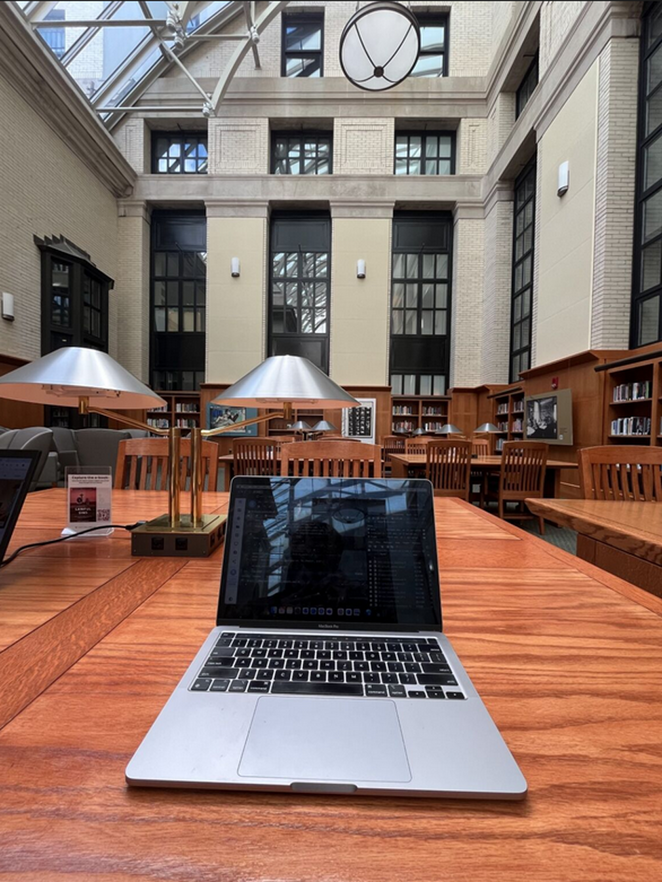
A still life on your desk?
These days, in Harvard’s Widener Library.
After waking up: How does your day start well?
Switching on good music! Whether it’s something upbeat or soothing, a good playlist in the background really sets the tone for my morning.
What do you look forward to on a normal working day?
Having some quiet hours to myself in the morning for focused work, without any meetings! Chatting and taking breaks with my colleagues in the fresh air.
What do you look forward to when your working day is over?
Coming home and cooking with my partner, swapping stories about our day and curling up with an interesting book afterwards.
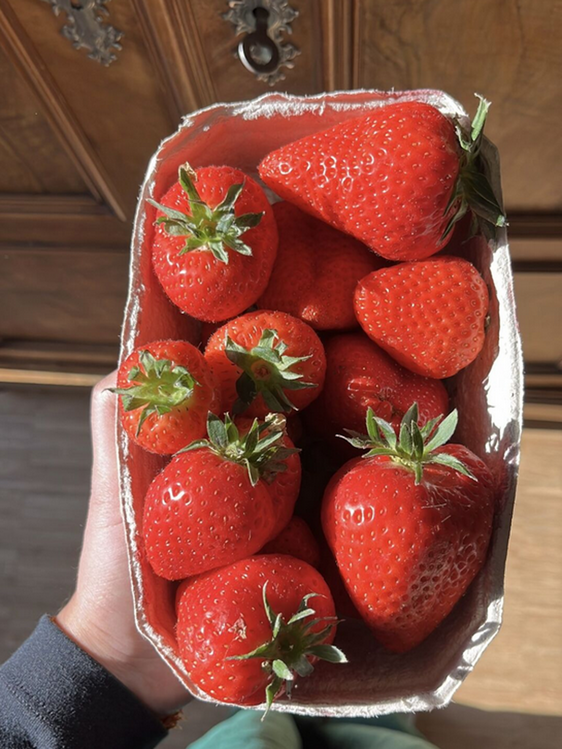
A helpful snack for in between meals?
A bit of fruit, like strawberries.
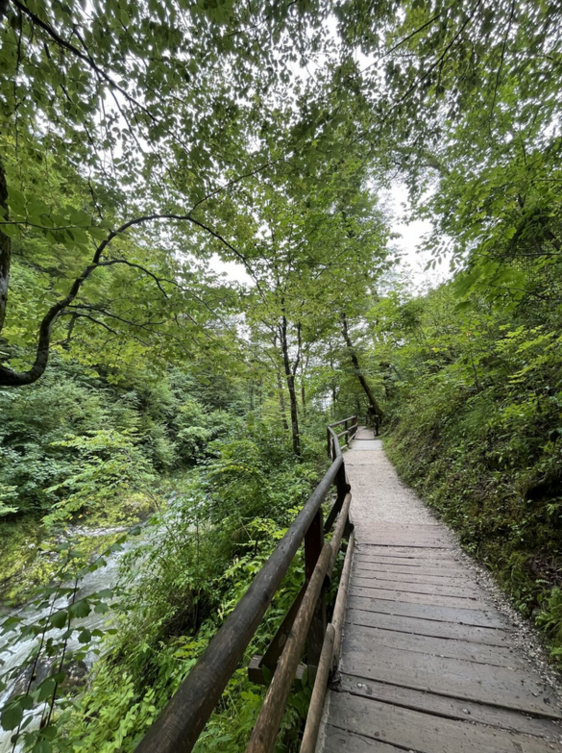
A little escape from everyday (working) life that helps you recharge your batteries quickly?
Taking long walks.
What helps you come up with ideas?
Reading new research papers and following political discussions. Hearing good ideas and understanding what policymakers are missing helps me come up with responses.
What helps you stay focused?
I like to keep the phone away from reach when I need to concentrate, especially since the brain takes time to refocus on a task after every distraction. I know that’s not feasible for everyone but it really does help. A night of solid, restful sleep does wonders too.
When do you forget everything else around you while you're working?
Those moments of focus and flow are amazing! Usually happens in the mornings when I’m coding or writing up a draft.
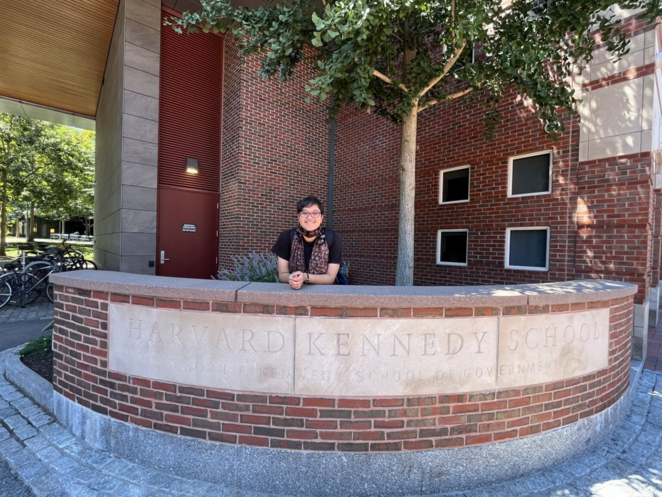
SONALI CHOWDHRY (32) is a trade economist and currently a Visiting Research Fellow at the Harvard Kennedy School. She is a Research Associate at the German Institute for Economic Research (DIW Berlin) and the Kiel Institute for the World Economy. Prior to this, Sonali was at the European University Institute as a Max Weber Fellow and earned her PhD in Economics from LMU Munich as a Marie Skłodowska-Curie Fellow. She also holds an MPhil in Economics from the University of Oxford, where she studied as a Rhodes Scholar from India. Sonali is participating in the Leibniz Mentoring Programme 2025/26.


